Monday, May 18, 2009

Loewe Calle Bag

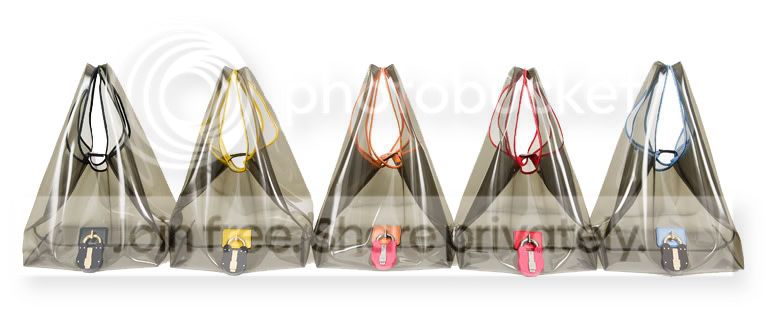
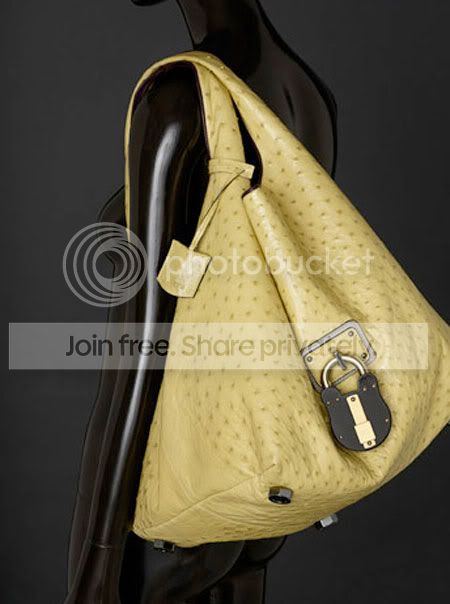
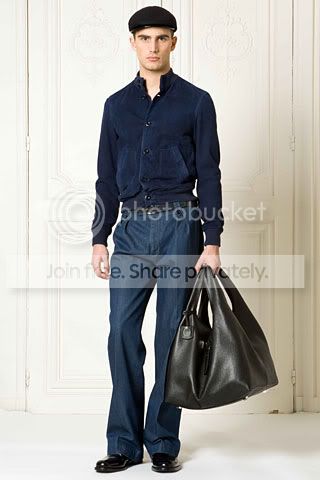
Stuart Vevers, current new creative director of Loewe has designed a bag which has the desirable slouchy shape, the jumbo padlock, but comes in various pricing that are tantalising for those who want them, from a price range that is affordable for the Masses to something high & exquisite for the Luxury Market. Vever's original Calle bag, which arrived in stores for autumn/winter 2008-09, was executed in the most luxurious materials by the Loewe craftsmen. The new vinyl Calle looks to be a fun and urban version of the original. It comes in clear tinted vinyl combined with five different napa colours: yellow, blue, orange, green and red - and will retail at £250. There are also another version of Calle for the Mens made of luxurious napa minus the big padlock.


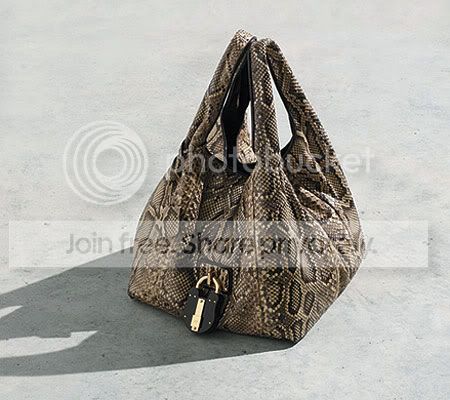
This is a very nice bag, i love it for it's generous size & luxurious feel especially their exotics, i prefer Python over Ostrich. I always love snakeskin, they are gorgeous & elegant, i hope they make it in Karung too. In my opinon, the original Calle is nicer, i prefer it to the Mens New Calle morever not much of a difference in price. If i were to get an exotic skin bag now, Loewe Calle definitely would make it into the Top 3 Choices in my list.


Image: Loewe

Sunday, May 3, 2009

Designerhomme Labels Pick #01 - LOEWE Madrid 1846

Madrid is known for two things: the world's most expensive football players and leather ware by Loewe.

The story of LOEWE dates back to 1846, with the founding of a leather goods workshop in the heart of Madrid. In 1872, German artisan Enrique Loewe Roessberg came to the Spanish capital Madrid and set up in partnership with the workshop. Twenty years later in 1892, now known as E. Loewe and its huge advertising poster became an icon of its day and this budding leather goods business finally caught the public eye. In 1905, when Enrique Loewe Hilton headed up the LOEWE business, King Alfonso XII awarded it the title of Purveyor of the Royal Household. Five years later, in 1910, LOEWE opened its first shop in Barcelona trappings of its original style. In 1945, the boxcalf bags were created that would soon become the company’s greatest classic. The year 1963 saw the beginning of LOEWE’s international expansion when a shop opened in London. With the arrival of the 70s, LOEWE started to create its own women’s ready-to-wear and designed its first scarves. The same year, Vicente Vela created the legendary Loewe anagram, marking the beginning of its expansion into Asia. Since 1988, LOEWE has also had its own foundation. Every year, the Loewe Foundation awards an international poetry prize. In 1996, LOEWE celebrated its 150th anniversary, the same year it took over LVMH for an international expansion.
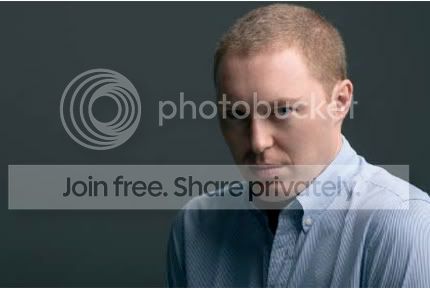

Stuart Vevers becomes creative director of LOEWE in 2008.

Stuart Vevers has the Midas touch when it comes to bags and accessories, and was poached from Mulberry to take over as the creative director of LOEWE, looking after not just leather goods but womenswear, too!
Stuart Vevers has been at Loewe just a year, moving from a gig as Mulberry's hit bag designer in London to a new life in Madrid to take on the luxury leather goods label. He's learning. "I was a bit notorious for overweight bags with giant hardware before," he laughed. "But here I've made everything soft and light. There's 160 years' worth of know-how, so I'm really concentrating on bringing out what we're good at." For pre-fall, Vevers pointed to a glossy brown leather coat with a plain man's belt tied around as "quintessential" Loewe, a lifetime classic. But finding a profile for the woman who might buy it is a work in progress. "The attitude is super-groomed but a bit tough. She has a definite shape, a waist, likes bold jewelry." She might also like to shrug on a mannish topcoat in a blurry herringbone or snap up a pair of super-fine suede gauntlets. The real test of Loewe's right to command the high ground, though, is the bags. Vevers said he'd studied a sand-colored suede carry-on piece, originally made in 1975, and applied the principle of soft structure to his ideas. That means puffy napa pouches, squashed ostrich hobos, and a lot of chain-handled lizard bags. The Vevers punch is in the proportion and details: This season the fastenings are bolt heads and the chains are as fine as can be.

LOEWE MADRID 1846 first caught my attention with their Anagram logo symbol of 4 interlocking "L" which reminds me of Egyptian Mythical Symbol of Scarab Beetle, Messenger of the God of Rising Sun. I am very interested in Ancient Mythical & Metaphysical Symbols.

LOEWE start to intrigue me more with their super soft, buttery Nappa Leather which surpassed Leathers of many Labels. LOEWE is from Spain which is famous for their lambskin, LOEWE Nappa leather has such tender touch you can't resist after getting one of them & they have wide array of colours available. If HERMES Leather is #1 & Best in the World, LOEWE definitely is #2 for such Luxurious Feel. Compared it with BV, LOEWE Leather is a clear winner. LOEWE also like to use Suede in their leather goods however personally i am never a fan of Suede as they are hard to maintain.

I just have a small collections of LOEWE leather goods. I love their Full Nappa Leather Bags like AMAZONA but prices are steep, other bags are made of Suede or Canvas i am not really interested. This season they got Exotics, Very beautiful LOEWE CALLE BAG.

Image: Loewe

Sunday, April 12, 2009

Designerhomme Book Pick #01 - Deluxe: How Luxury Lost Its Lustre : Dana Thomas


The Devil Wears Hermès (He Bought It at the Caesars Palace Mall in Las Vegas)

By MICHIKO KAKUTANI
Published: August 21, 2007

Back in the late 1980s, the Prada backpack — made out of black or tobacco-brown parachute fabric trimmed in leather — became the “it” bag for many would-be fashionistas. It was hip, modern, lightweight and at $450 expensive, but not as expensive as the stratospherically priced bags made by Hermès and Chanel. According to the fashion reporter Dana Thomas, that Prada backpack was also “the emblem of the radical change that luxury was undergoing at the time: the shift from small family businesses of beautifully handcrafted goods to global corporations selling to the middle market” — a shift from exclusivity to accessibility, from an emphasis on tradition and quality to an emphasis on growth and branding and profits.


With “Deluxe: How Luxury Lost Its Luster,” Ms. Thomas — who has been the cultural and fashion writer for Newsweek in Paris for 12 years — has written a crisp, witty social history that’s as entertaining as it is informative. Traveling from French perfume laboratories to Las Vegas shopping malls to assembly-line factories in China, she traces the evolving face of the luxury goods business, from design through marketing to showroom sales.

She gives us some sharply observed profiles of figures like Miuccia Prada, who was a Communist with a doctorate in political science when she took over her family’s small luxury goods business in 1978, and the business tycoon Bernard Arnault, who relentlessly built LVMH into a luxury monolith with dozens of brands (including Louis Vuitton, Givenchy and Dior) sold around the world.

Ms. Thomas peppers her narrative with lots of amusing asides about everything from
how orange became Hermès’s signature color because it was the only color widely available during World War II to the money-saving benefits of raw-edge cutting, which has been marketed to the public as a cutting-edge, avant-garde innovation.

But her focus remains on how a business that once catered to the wealthy elite has gone mass-market and the effects that democratization has had on the way ordinary
people shop today, as conspicuous consumption and wretched excess have spread around the world. Labels, once discreetly stitched into couture clothes, have become logos adorning everything from baseball hats to supersized gold chains. Perfumes, once dreamed up by designers with an idea about a particular scent, are now concocted from briefs written by marketing executives brandishing polls and surveys and sales figures.

With globalization, Paris and New York are no longer exclusive luxury meccas. Ms. Thomas notes that a gigantic 690,000-square-foot luxury mall called Crocus City (featuring 180 boutiques, including Armani, Pucci and Versace) is flourishing outside Moscow, and that a group of high-end boutiques will be part of a luxury complex called Legation Quarter, scheduled to open in Tiananmen Square later this year.

“Approximately 40 percent of all Japanese own a Vuitton product” today, she says, and one recent poll showed that by 2004 the average American woman was buying more than four handbags a year. With more people visiting Caesars Palace’s glitzy Forum Shops each year than Disney World, Las Vegas has made shopping synonymous with gambling and entertainment, even as outlet malls have brought designer clothing and accessories within the reach (and budget) of many suburbanites.

High-profile luxury brands like Louis Vuitton, Hermès and Cartier were founded in the 18th or 19th centuries by artisans dedicated to creating beautiful, finely made wares for the royal court in France and later, with the fall of the monarchy, for European aristocrats and prominent American families. Luxury remained, writes Ms. Thomas, “a domain of the wealthy and the famous” until “the Youthquake of the 1960s” pulled down social barriers and overthrew elitism. It would remain out of style “until a new and financially powerful demographic — the unmarried female executive — emerged in the 1980s.”

As both disposable income and credit-card debt soared in industrialized nations, the middle class became the target of luxury vendors, who poured money into provocative advertising campaigns and courted movie stars and celebrities as style icons. In order to maximize profits, many corporations looked for ways to cut corners: they began to use cheaper materials, outsource production to developing nations (while falsely claiming that their goods were made in Western Europe) and replace hand craftsmanship with assembly-line production. Classic goods meant to last for years gave way, increasingly, to trendy items with a short shelf life; cheaper lines (featuring lower-priced items like T-shirts and cosmetic cases) were introduced as well.

Although this volume quotes Anna Wintour, the editor of Vogue, saying such changes mean that “more people are going to get better fashion” and “the more people who can have fashion, the better,” the author reaches a more elitist and pessimistic conclusion. “The luxury industry has changed the way people dress,” she writes. “It has realigned our economic class system. It has changed the way we interact with others. It has become part of our social fabric. To achieve this, it has sacrificed its integrity, undermined its products, tarnished its history and hoodwinked its consumers. In order to make luxury ‘accessible,’ tycoons have stripped away all that has made it special.

“Luxury has lost its luster.”

This is certainly a very interesting book to read, Writer Dana Thomas excellent analogy of Louis Vuitton as Macdonald's of Luxury Industry make me wonder, "Is luxury losing its wow factor to any of you? "

Article: NY Times Books

Saturday, April 11, 2009

Designerhomme News Pick #01 - Tracey Jackson - NY Times Article About Her Bags

These days, it's the handbag that makes the woman

By Elizabeth Hayt, The New York Times, 21st July 1999


NEW YORK -- Tracey Jackson's collection of nearly 100 handbags is displayed with a reverence usually reserved for reliquary objects. The purses -- limited-edition Gucci bags, one-of-a-kind vintage styles, beaded pouches from India -- rest on tables and shelves all around her Upper East Side town house. "Not just the usual 10021 collection," Ms. Jackson proudly pointed out, referring to her ZIP code.


Her most prized pocketbook, what might be called the holy of holies, is an oversize Hermes satchel in buttery tan leather. Ms. Jackson, a screenwriter, first spotted the limited-edition style in Hawaii a few months ago, on the arm of a Japanese tourist. The woman spoke no English but understood the word Hermes -- a universal language, noted Ms. Jackson, who then tracked down the bag in Beverly Hills.

"I am a bag freak," Ms. Jackson confessed, and there is no doubting her. She recently sold a script to Working Title, the English film production company, about a wife and a mistress who accidentally switch Hermes Kelly bags. "If I was down to my last $1,000, I'd buy a purse," she said. "I think about them every day."


Hers is an obsession shared by more and more women these days, as ornamentation and color continue to invigorate fashion, spicing up the minimalism of the mid-'90s. The basic black leather bag, a staple of most every woman's wardrobe, looks tired by comparison to newer purses in unusual fabrics or embellished with embroidery, beading and fur. The accessories market, whether low- or high-end, is peaking in part because of widespread handbag fever.


Across the country, women are parading out of stores with new purses in hand. At Barneys New York, handbag sales since February are up 31 percent compared with the same period last year. Stanley Korshak, a luxury retail store in Dallas where novelty purses are outselling black ones, has also seen a 30 percent increase in handbag sales this year.


No industrywide figures exist, but almost everyone in the handbag business reports excellent sales, for a few basic reasons: the note of indulgence that bags lend to monochromatic dressing styles, their relative affordability as status labels and the successful marketing of the notion that women ought to acquire a "wardrobe" of handbags for all occasions.


Under the continuing reign of minimalist clothing, when it is nearly impossible to distinguish a Calvin Klein ensemble from a Helmut Lang ensemble, a handbag sets a woman apart, said Valerie Steele, chief curator of the Museum at the Fashion Institute of Technology. "Clothes are sort of anonymous," she said. "You make your fashion statement now with the bag."


This is the sort of thing fashion professionals said about shoes not long ago, to explain the profusion and popularity of styles from $500 spike heels to high-tech running sneakers to hippie-style sandals.


Now, it is the turn of the handbag. "Bags are fresher now," said Ms. Steele, who is writing a book, "Bags: A Lexicon of Style," to be published by Rizzoli in November. "Historically, women are always into shoes, but this year bags have taken off, and they are the current mania."


Ginny Bond Donahue, 27, an aspiring actress in New York, has acquired a dozen purses since March, more than she had bought in the two years before that. "I used to dress from the shoes up," she said. "Now, I dress from the bag around. I'll work an outfit around my purse."
Michelle Kessler, accessories director of Vogue, says that many women are thinking similar thoughts when getting dressed. "It used to be the bag and shoes could save an outfit," she said. "Now, it's the bag and shoes that can make an outfit."


Beth Shepherd, one of the owners of Kirna Zabete, a boutique soon to open in SoHo, said, "I'll buy any sort of bag, from a cheap African basket off the street to a pink Louis Vuitton." In her apartment, a personal cache of 200 purses hangs from a coat rack. When she and her partner, Sarah Hailes, were accumulating inventory for their store, they were so enticed by the fall handbag selection that they had to cut back on their clothing budget. "I can't get enough of them," Ms. Shepherd said. "I'm constantly changing my bags. If I go away on vacation for a week, I'll take 15 bags."

This is an interesting article about Tracey Jackson although it's vintage piece of news from 1999 however it's about Screen Writer Of "Confessions of a Shopaholic", many will still be interested in this. From the Article then, she seem to be a shopaholic too.

Article: NY Times

Thursday, March 26, 2009

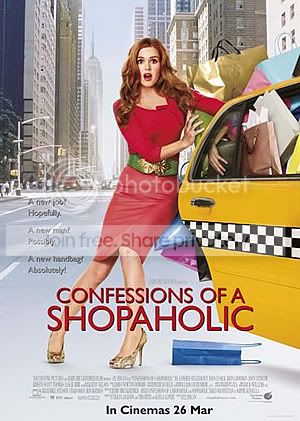
Designerhomme Movie Pick #01 - Confession Of A Shopaholic


“Confessions of a Shopaholic“, based on a Sophie Kinsella’s best-selling series of novels, has been released.


The film stars Isla as Rebecca Bloomwood, a girl who loves shopping but winds up in credit card debt and has to take a job writing for a fashion magazine to pay for it all. Zaniness, it is assumed, ensues as she interacts with high-society and finds true love and all that stuff that jazz.

Confessions of a Shopaholic is directed by P.J. Hogan, of My Best Friend’s Wedding and Peter Pan previously. The screenplay was written by Tim Firth (Calendar Girls, Kinky Boots) and Tracey Jackson (The Guru, The Other End of the Line).


I first heard about this best selling novel gonna be make into a movie in 2006 from "The Purse Forum", it's from a lady called "Tracey Jackson", a member known as "traceyd". She was featured in NY Times in 1999 in an Article about her collection of about 100 bags, she is also a screen writer. An excerpt from her reply in "The Purse Forum", "the screenplay like many is still not made...last reading was meryl streep and kate hudson so we will see. i did adapt the book CONFESSIONS OF A SHOPAHOLIC, which should be made in the next year or so...thx 4 asking. " It is finally made into a Movie, not in a year or two but 3 years later now in 2009, In Cinema 26th March.

I managed to catch this Movie on it's opening today. Almost Fullhouse at the cinema, i purposely chosed a cinema out of town as i do not want to queue up for too long to buy the tickets. My dear friend bought the tickets & waited for me at the cinema, not his kind of movie but still he enjoyed it with me. It's a great light hearted comedy which carried a warning about those magic cards that can ruin your financial well-being if you abuse it. I am sure everyone is a Shopaholic at heart when we see something WE LIKE not something WE NEED in this Material World, we will still have the urge to buy it. I Admit I Am A Shopaholic At Times but i always shop & buy within my Financial Means, I am Liability-Free although i am always buying something new. Well this movie is nice to watch but not as good as "The Devil Wears Prada" nevertheless enjoyable as "Sex And The City"!

Tuesday, January 20, 2009

Louis Vuitton Stephen Sprouse Graffiti Launch Party


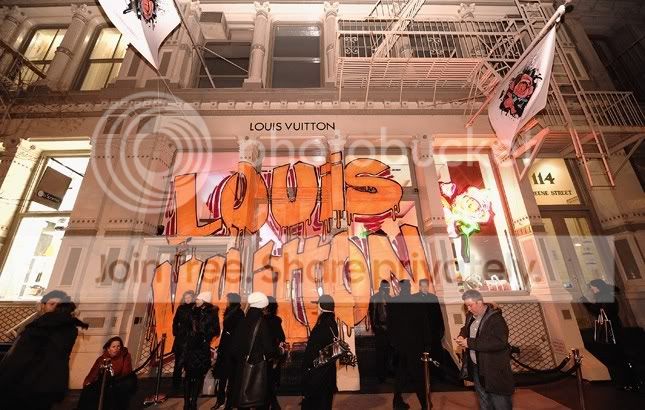
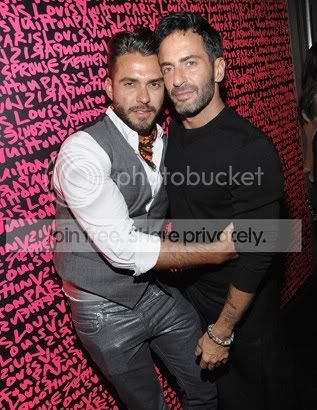
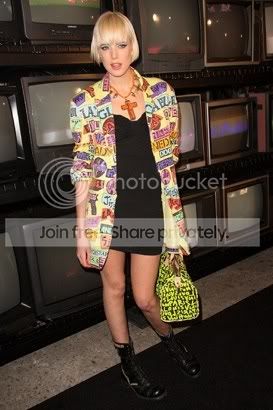
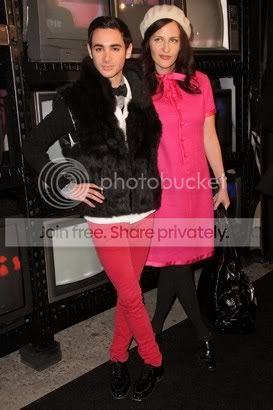
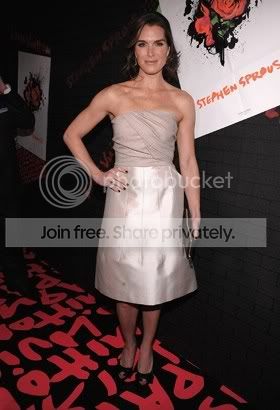
Louis Vuitton paid tribute to the late graffiti artist Stephen Sprouse with a splashy launch and afterparty at NYC January 8, 2009. Marc Jacobs, who has used Sprouse's designs for Louis Vuitton in the past, has created a limited-edition collection inspired by their initial collaboration, due in stores on 15 January. The event, held at the Louis Vuitton Soho store in New York, was attended by the kind of hip mix only Jacobs can pull: guests included Agyness Deyn, Donna Karan, and trendy singer Leigh Lezark, as well as Debbie Harry, who put on a show at the afterparty. True to the artist's aesthetic, the shop front was decorated with a huge Louis Vuitton graffiti logo, while inside the walls and ceilings were covered with Sprouse's scrawl in neon colours against a black background. Jacobs, who cancelled his famous annual Halloween party last near, seemed to be back in the party sprirt, posing with boyfriend Lorenzo Martone for photographers.


Now Louis Vuitton is not the first name that springs to mind when you mention the words ‘urban' and ‘skateboarder', but they've gone all downtown on us to launch a new collection in tribute to the late graffiti artist and fashion designer, Stephen Sprouse. The façade of the boutique store in New York's SoHo got a graffiti artists' once-over in neon shades, accompanied by a six foot light installation of the Sprouse rose motif. All this acted as a backdrop for cocktails and canapés to launch the Louis Vuitton collection of graffiti inspired printed T-shirts and accessories. A designer wearing their heart on their hoody? Whatever next?!


Image: handbag.com

Tuesday, January 13, 2009

Louis Vuitton Stephen Sprouse Tribute Collection: Monogram Graffiti Neverfull GM


The Popular Classic Neverfull covered entirely with LOUIS VUITTON PARIS in fluorescent neon coloured graffiti letters, making the classic into a hip and funky tote for the young and young at heart.

Graffiti Neverfull features golden brass hardware that looks impeccable in contrast to the bag's natural cowhide trimmings, handles, and side straps. The interior lining comes in pink textile with small graffiti print which really makes a perfect statement even if its in the inside. Neverfull also has on inside zippered pocket with a D-ring for attaching a purse or a key holder. It's capacity can be adjusted thanks to its leather side straps.The bag measures 15.7" x 13" x 7.9" and comes in three colors: Fuschia, Green and Orange.

I always thought Neverfull is a very nice, useful & practical bag however due to the dangling Leather drawstring ties on each side, i never got one as it can't be carry off as an Unisex bag. GM is the perfect size for tote bag, personally i love big bag.

Image: Louis Vuitton